Double Loop Tie Wire

Double Loop Bale Tie Wire

CNIP High-Performance Double Loop Bale Tie Wire

Premium Raw Materials & Quality Assurance

At CNIP, our manufacturing process begins with the highest grade of High Tensile Steel. We produce industrial-grade Quick Links and Double Loop Bale Tie Wires specifically engineered for high-pressure agricultural and industrial baling. By maintaining strict control over our raw material source, we ensure that our wires provide the elasticity and strength required for automated cotton packing and recycling systems.

NABL Accredited Laboratory Testing: Unlike standard traders, every batch of CNIP raw material undergoes rigorous metallurgical analysis in NABL accredited laboratories. This guarantees that our tensile strength and ductility consistently outperform generic suppliers like Sainath Wires or Bajaj Steel.

Standardized Testing & Inspection Procedures

To ensure zero-failure performance, we implement a standardized inspection protocol. Our quality control team conducts break tests and elongation analysis at controlled speeds ranging from 0.25" to 5 inches per minute. This systematic assessment of mechanical properties ensures that our single and double loop ties can withstand the intense expansion force of compressed bales without snapping.

  • Material: Specialized High-Tensile Carbon Steel
  • Coating: Premium Galvanized or Phosphate options for corrosion resistance
  • Compliance: Tested for elongation and break-load reliability

Advanced Wire Drawing & Metallurgical Refinement

The production of high-tensile bale ties begins with a precision wire drawing process. This metalworking technique involves reducing the cross-sectional area of the steel rod by pulling it through a series of specialized tungsten carbide dies. Unlike generic traders, CNIP controls this reduction process to ensure the inner grain structure of the steel remains uniform.

Wire drawing is a critical metalworking process at CNIP used to refine our high-tensile steel rods. By pulling the material through a series of specialized tungsten carbide dies, we progressively reduce the cross-sectional area to achieve the exact diameter required for industrial bale ties.

This multi-stage drawing process significantly enhances the tensile strength and flexibility of the metal through work hardening. It is essential for ensuring dimensional accuracy and a smooth surface finish—qualities that are vital for the reliable performance of Double Loop Bale Wires in high-pressure cotton ginning and recycling balers. By controlling every stage of reduction, we guarantee a product that meets global quality standards for precision and durability.

Industrial wire drawing process for high tensile double loop bale ties
Industrial hot-dip galvanizing process for double loop bale ties

Advanced Galvanizing & Zinc Coating Process

The production of Corrosion-Resistant Double Loop Bale Wire begins with a meticulous surface treatment. At CNIP, our steel wire undergoes a rigorous chemical cleaning phase to remove surface impurities, ensuring maximum zinc adhesion before it is drawn to precise industrial thicknesses.

To achieve superior weatherproofing, the wire is subjected to **hot-dip galvanizing**, immersing it in molten zinc, or an advanced **electrolytic process**. This creates a metallurgical bond that prevents rust—critical for agricultural packing and international shipping. After cooling, the galvanized wire is precision-cut and looped, creating a durable product trusted across the construction, fencing, and cotton ginning industries.

Precision Wire Straightening Process

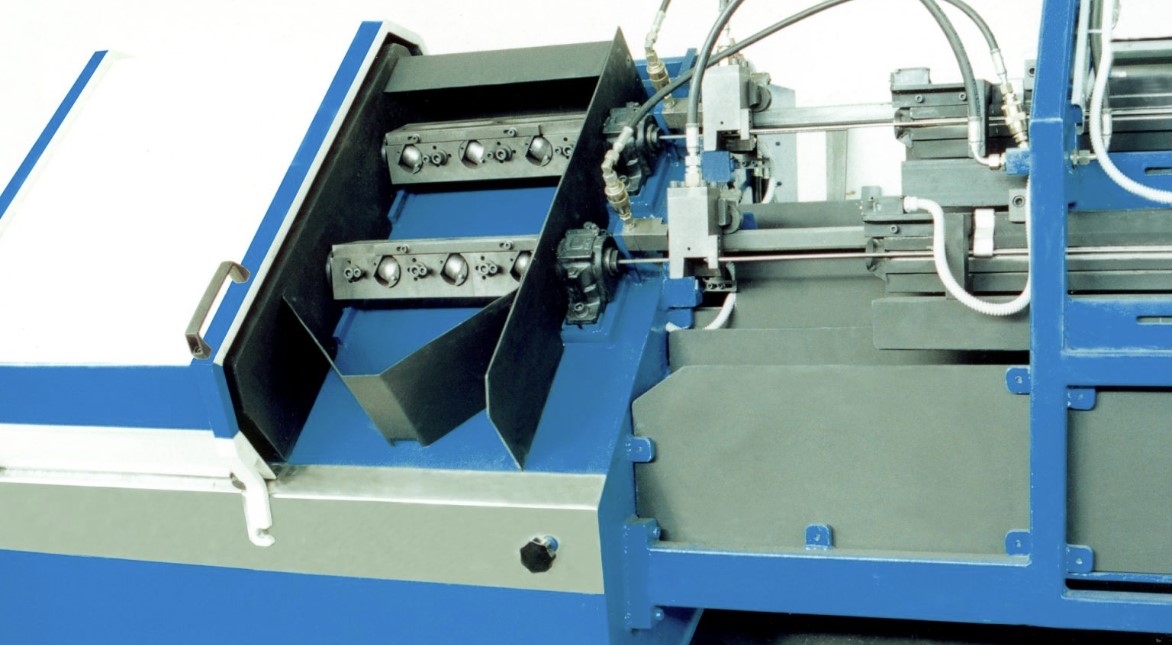
CNIP utilizes a proprietary Hyperbolic Roller Rotor straightening method, an R&D breakthrough developed by our engineers 25 years ago. This state-of-the-art technique is internationally recognized for its precision, ensuring that every double loop bale tie is perfectly linear and ready for high-speed automated packing.

Our latest fourth-generation straightening rotors provide exceptional results across all material grades. The unique rotor rotation creates a spiral motion, facilitating simultaneous straightening and feeding. Furthermore, the hyperbolic roller profile maintains a full line of contact with the wire, which significantly reduces surface marking and ensures the structural integrity of the high-tensile steel.

CNIP fourth-generation hyperbolic roller rotor for precision wire straightening
Fully automatic wire cutting machine for custom length bale ties

Automated Wire Cutting & Custom Lengths

CNIP operates a fully automatic Quick Link manufacturing line integrated with high-speed precision cutting technology. Our infrastructure is engineered to deliver double loop bale tie wires tailored to exact customer specifications, with standard and custom lengths ranging from 70 inches to 150 inches.

By utilizing advanced computerized machinery, we ensure uniform cutting accuracy with minimal tolerances. This streamlined production process eliminates manual errors, enhances operational efficiency, and ensures that every bale tie fits your packing system perfectly, whether for cotton ginning or industrial recycling.

Precision Double Loop Bending & Quick Link Formation

The Quick Link or double loop is formed through precision bending of high-tensile wire into a secure, semi-circular configuration. This geometry is specifically engineered for cotton bale packing and high-density raw material bundling, ensuring the tie remains locked under the immense expansion pressure of the bale.

CNIP utilizes fully automatic wire bending and looping machines to maintain consistent quality across high-volume production runs. This automation ensures perfect loop symmetry, which is critical for smooth manual or machine fastening. By eliminating manual bending variances, we provide high-performance bale ties that increase speed at the ginning press, reduce labor costs, and offer a significant competitive advantage in industrial packaging.

Automated high-speed wire looping machine for manufacturing double loop bale ties

Rigorous Tensile Strength & Quality Testing

Every batch of CNIP Double Loop Bale Wire undergoes stringent mechanical evaluation using specialized universal testing machines (UTM). This apparatus is engineered to measure the breaking load capacity and elasticity of our quick links, ensuring they can withstand the extreme internal pressure of compressed cotton and industrial bales.

Our testing protocol measures critical parameters including tensile strength, yield strength, and percentage elongation. By applying controlled force until fracture, we verify that our wires meet international safety standards and NABL requirements. Featuring digital readouts and automated data recording, our calibration systems guarantee accurate, repeatable results for consistent performance in the field.

High-precision tensile strength testing machine for double loop bale ties
Seaworthy export packing for double loop bale tie wires

Global Supply & Customized Export Packing

CNIP provides specialized packing solutions for our high-tensile quick links and double loop wires. To ensure maximum product safety during long-distance transit, we offer several seaworthy packaging options, including reinforced wooden crates, heavy-duty corrugated boxes, and moisture-proof stretch film wrapping.

As a leading manufacturer and global exporter, we maintain a robust supply chain serving the USA, Africa, Turkey, Mexico, and India. Our logistics team is experienced in international shipping standards, ensuring that our bale tie wires arrive in perfect condition, ready for immediate use in your ginning or recycling facilities.